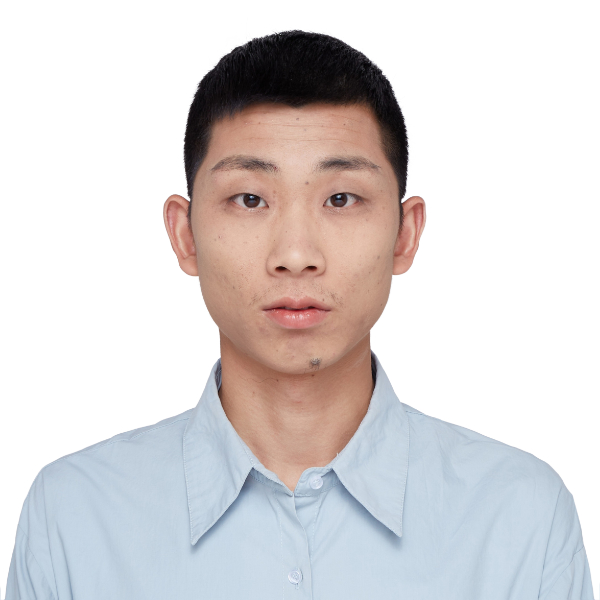
I am a Ph.D. student in Computer Science at University of Southern California, very fortunate to be advised by Prof. Jiapeng Zhang.
Currently, my research focuses on building the theory of provable and practical quantum advantages for optimization problems. I am also interested in AI Interpretability.
“What I cannot create, I do not understand.”
Publications
Prediction Under Imperfect Compression: A Theory of Approximate MDL
The Fortieth Annual Conference on Neural Information Processing Systems (NeurIPS) 2026 (oral, top 1.4 % of accepted papers)
Quantum Communication Lower Bounds for Search Problems via Matrix Discrepancy
38th ACM-SIAM Symposium on Discrete Algorithms (SODA 2027)
Exponential Separation of Quantum and Classical One-Way Numbers-on-Forehead Communication
67th Annual Symposium on Foundations of Computer Science (FOCS 2026)
A Lifting Theorem for Hybrid Classical-Quantum Communication Complexity
The 53rd EATCS International Colloquium on Automata, Languages, and Programming (ICALP 2026)
A Min-Entropy Approach to Multi-Party Communication Lower Bounds
40th Computational Complexity Conference (CCC 2025)
Gadgetless Lifting Beats Round Elimination: Improved Lower Bounds for Pointer Chasing
16th Innovations in Theoretical Computer Science (ITCS 2025)
Communication Lower Bounds for Collision Problems via Density Increment Arguments
56th Annual ACM Symposium on Theory of Computing (STOC 2024)
Communication Lower Bounds of Key-Agreement Protocols via Density Increment Arguments
21st Theory of Cryptography Conference (TCC 2023)
Professional Service
Conference Reviewer: QIP 2027, ITCS 2027, SOSA 2027, SODA 2027, MFCS 2026, FOCS 2026, PODS 2026, CRYPTO 2025, ITCS 2025, COCOON 2024